What Does It Mean to Be Mindful With Your Money?
When you think about managing your money, how does it make you feel?
Calm and confident? Overwhelmed? Perhaps slightly guilty about something you've spent — or vaguely aware that you don't have a particularly clear picture of where your money is going?
Money can bring up all sorts of emotions. And sometimes, when life is busy, it can feel easier not to look too closely.
But I've found the opposite can be true.
Knowing where you stand financially can create a sense of clarity and choice.
That’s what money mindfulness means to me.
It isn’t about watching every dollar, never buying anything unnecessary or constantly worrying about the future. It’s about becoming more conscious of what you have, where it’s going and whether the choices you’re making with your money support the life you want to live.
It’s about finding a way to enjoy the present while still being mindful of the future.
Because while looking ahead matters, I don’t believe life is meant to be spent waiting for some distant point when we’ll finally give ourselves permission to enjoy it.
A Budget Isn't Just About Spending Less
For years, budgeting has had a bit of an image problem.
It can sound restrictive — something designed to tell us what we can't afford or make us feel guilty about what we've already spent.
I prefer to think about a budget as information.
I've always believed that knowledge is power, and I think that applies to our money too.
A budget gives you a clearer picture of the money coming in, the money going out and what might be possible from there. Rather than avoiding the numbers because they feel overwhelming, knowing where you stand can give you greater clarity and confidence about what you do next.
And that awareness can help you make choices.
Perhaps there are expenses that no longer feel worthwhile. Perhaps there's something you really value that you'd happily spend more on. You might want to save for a holiday, reduce debt, build greater financial security or simply know that you can enjoy dinner with friends without wondering afterwards whether it was really within your budget.
Being mindful with money isn't necessarily about spending less. It's about having the knowledge to make more intentional choices about where your money goes.
And importantly, your priorities don't need to look like anybody else's.
What Does Financial Freedom Mean to You?
I think we sometimes talk about financial freedom as though there's one magical number we're all trying to reach.
But what does financial freedom mean to you?
For me, it has never simply been about accumulating as much money as possible. Money represents choice and freedom — the ability to look after the people I love, enjoy experiences and travel, have fun with friends, invest in things that matter to me and feel confident that I'm also thinking about the future.
It’s something I’ve explored in many conversations on It’s a Mindset too — what wealth, success and financial freedom can actually mean, and how differently those things can look from one person to the next. Again and again, I’m reminded that money is rarely just about money. It’s connected to our values, choices, beliefs and the way we want to live.
Your version might look completely different.
That's why I think the more interesting questions are:
What matters to me?
What do I want my money to make possible?
Once we understand that, budgeting becomes less about restriction and more about alignment.
We can start looking at whether the way we're earning, spending and saving reflects what we actually value.
Enjoying Your Money Now Matters Too
Planning for the future is important. But so is being here for the life that’s happening now.
I talk a lot in my work about the “I’ll be happy when…” mindset — I’ll be happy when I earn more, when the mortgage is paid off, when the kids have left home, when I retire, when life finally slows down...
The problem is, there can always be another when.
I’ve never wanted financial wellbeing to mean continually postponing the things that bring joy and meaning to our lives while we work towards the next goal.
There are experiences we may want to have now — travelling with our families while everyone can still go, celebrating something special, taking a weekend away, trying something new or simply having enough room in the budget for the little things that make everyday life more enjoyable.
That doesn’t mean ignoring tomorrow.
It means finding greater harmony between enjoying what we’ve worked for today and making choices that support the future we want to create.
And that’s where being intentional with money can be incredibly empowering.
Making Room for the Things You Value
Travel is a perfect example for me.
I love travelling. It's something I genuinely value and want to make room for in my life.
But there's a very different feeling between booking a holiday knowing you've thought through the costs and booking one, crossing your fingers and dealing with the financial fallout later.
That's why I created my Holiday Hero Budget Planner, which is currently being refreshed and will be available again soon.
It allows you to map out the real cost of a holiday — not just the flights and accommodation, but all those other expenses that can quietly add up — so you can see what the trip might cost and make your decisions from there.
Maybe you realise the holiday is completely achievable. Maybe you decide to change the destination, travel at a different time, save for a little longer or adjust what you're willing to spend.
There's no one right answer.
The point is that you're making the decision consciously rather than leaving your finances to chance.
And while travel happens to be something I value, the same principle can apply to whatever matters to you.
Looking After Future You
Of course, money mindfulness isn't only about creating room for what we want today.
It's also about remembering the version of ourselves who will be living with the choices we're making now.
That might mean thinking about savings, debt, superannuation, investments or other longer-term financial goals. You don't have to have every aspect of your financial future perfectly mapped out to start paying attention to it.
Sometimes the first step is simply knowing where you are.
I like to look ahead and think about what we're working towards over the coming years. Plans change — life has a habit of seeing to that — but having some sense of direction helps me make today's financial decisions with the bigger picture in mind.
For me, that's another part of money mindfulness:
What choices can I make today that Future Me will be grateful for?
The answer will look different for each of us.
Money as a Tool for Creating a Life You Love
Ultimately, I don't think money is the destination.
It's a resource.
It can provide security, create choices, open up experiences and give us greater freedom over how we live.
But having more money doesn't automatically tell us what matters to us or how we want to use it.
That's the part we get to decide.
And perhaps that's why being mindful with money matters so much. When we understand our finances and connect our financial choices with our values, money can become less about fear, comparison or restriction and more about intentionally supporting the life we want to create.
A Simple Place to Begin
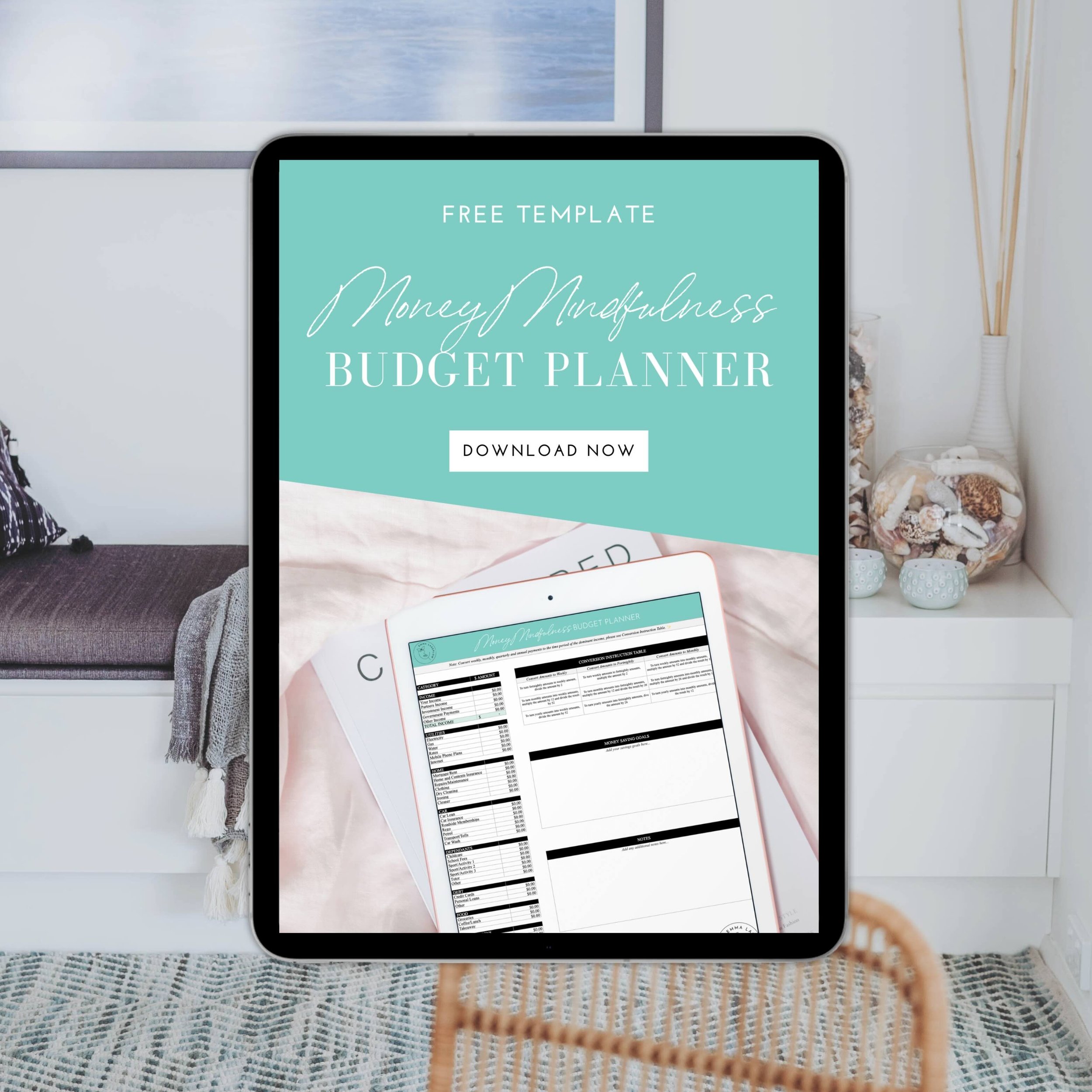
If you'd like to become more conscious of where your money is going and how it can support the life you want to create, my free Money Mindfulness Budget Planner is a simple place to begin. It can help you get a clearer picture of your income and expenses and start making more intentional choices with your money.
Because being mindful with money isn't about taking the joy out of spending it.
It's about using it intentionally to support a life you can enjoy today, while still taking care of your future.
Yours in money mindfulness,
Emma x